
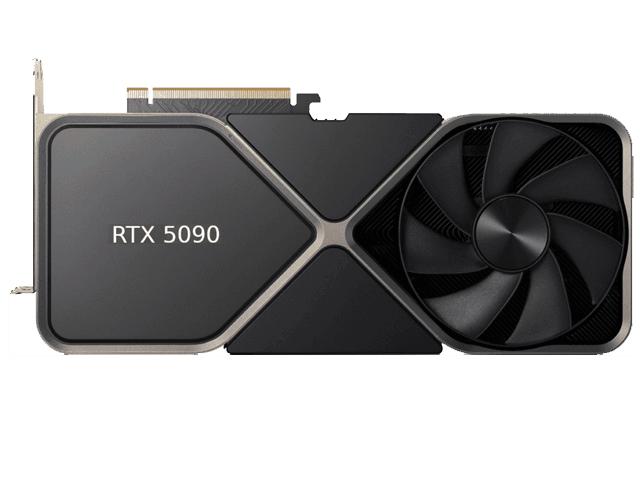
Image Credit: NVIDIA
Reports suggest NVIDIA may be redirecting its most powerful consumer GPU chips toward professional graphics cards and AI infrastructure, potentially making its flagship gaming card even harder to find.
The graphics card market could be facing another major shakeup. NVIDIA has reportedly stopped allocating chips for its GeForce RTX 5090 gaming graphics cards, with new supplies allegedly being redirected toward professional GPUs designed for artificial intelligence and other demanding workloads.
The report, covered by Tom’s Hardware and Video Games Chronicle on October 10 and 12, respectively, is based on claims from hardware industry leakers. If accurate, the change could reduce the supply of NVIDIA’s flagship consumer graphics card and put further pressure on prices. However, NVIDIA has not officially confirmed that RTX 5090 production has ended.
For PC gamers, the possibility raises an important question: could the demand for AI hardware make it increasingly difficult to buy the most powerful gaming graphics cards?
Why Is NVIDIA Reportedly Shifting RTX 5090 Chips Toward AI Hardware?
According to Tom’s Hardware, hardware leakers have claimed that NVIDIA is no longer allocating its GB202 graphics processors to consumer RTX 5090 cards. The same reports suggest that future supplies of the chip could instead be reserved for professional and data center products.
The GB202 processor is central to the RTX 5090, NVIDIA’s flagship GeForce gaming graphics card. It is also used in professional products aimed at visualization and AI workloads. That overlap gives NVIDIA a potential financial incentive to prioritize products that can command significantly higher prices.
For example, Tom’s Hardware notes that the RTX PRO 5500 Blackwell workstation GPU has 21,760 CUDA cores, matching the RTX 5090’s core count, but offers 84GB of GDDR7 memory compared with the RTX 5090’s 32GB. NVIDIA’s higher end professional graphics products also target customers with very different budgets from typical gaming PC builders.
Professional GPUs serve workloads such as AI development, advanced visualization, and other computationally intensive tasks. Businesses building AI infrastructure may be willing to spend considerably more on hardware designed for those environments.
If NVIDIA is facing limited supplies of the relevant chips, prioritizing professional products could therefore make economic sense. However, that explanation remains an industry interpretation of the reported decision, rather than a confirmed statement of NVIDIA’s intentions.
What Does This Mean for PC Gamers?
The biggest immediate concern is availability.
The RTX 5090 launched with a recommended US price of $1,999, but Video Games Chronicle reported that market prices had climbed to around $4,000 to $5,000 or more by October 12, 2026. Actual prices vary by retailer, model, and available stock, and those figures should not be treated as a universal current price.
If the reported production halt is accurate, the supply of new cards could gradually shrink as existing inventory is sold. Retailers and graphics card manufacturers may still have stock, so the RTX 5090 would not necessarily disappear from stores overnight.
However, reduced supply could make it harder for buyers to find a card at a reasonable price. Resellers may also take advantage of scarcity, especially if demand remains strong among enthusiasts and professionals seeking powerful hardware.
The effects would be particularly frustrating for gamers building high end PCs for demanding games, 4K gaming, ray tracing, or creative work. The RTX 5090 is also attractive to people who use the same computer for gaming, 3D rendering, video production, and local AI experimentation.
Still, there is no guarantee that the reported change will immediately affect every graphics card in NVIDIA’s lineup. The extent of any price increases will depend on inventory, demand, competing products, and NVIDIA’s future plans.
Could AI Demand Be Reshaping the Gaming GPU Market?
The report highlights a growing tension in the graphics hardware industry: gaming PCs and AI infrastructure increasingly compete for advanced computing resources.
Graphics processors are useful for AI because they can perform many calculations in parallel. That capability makes them valuable for workloads such as neural network training and inference, alongside their familiar role in rendering video game graphics.
NVIDIA now serves both markets, but the economics are different. Consumer graphics cards compete on gaming performance and retail pricing, while professional and data center products are sold to customers who may prioritize memory capacity, specialized features, support, and performance for commercial workloads.
When manufacturing capacity or chip supplies are constrained, the company has to decide how to allocate resources among these markets. If professional products deliver higher margins, shifting supply toward them could be financially attractive.
That does not mean NVIDIA is abandoning gaming. The company continues to maintain its GeForce product family, and its official developer documentation still lists the GeForce RTX 5090 among supported GPUs. That listing does not establish whether production is continuing, but it illustrates why the distinction between an alleged production halt and an official product discontinuation matters.
For gamers, the larger concern is whether AI related demand will continue to influence the prices and availability of the components needed to build powerful PCs.
Is the RTX 5080 24GB the Next Flagship?
The same reports have raised the possibility that an RTX 5080 variant with 24GB of memory could take a more prominent position in NVIDIA’s consumer graphics lineup.
Tom’s Hardware reports that a 24GB RTX 5080 has been rumored as part of a possible refresh of the RTX 50 series. Such a card could offer more memory than the current 16GB RTX 5080 and potentially serve buyers looking for a high end alternative if RTX 5090 availability declines.
However, the rumored RTX 5080 24GB has not been officially confirmed as a replacement for the RTX 5090. Its specifications, pricing, release date, and availability remain uncertain.
Even if NVIDIA introduces a higher memory version of the RTX 5080, it would not automatically provide the same performance as the RTX 5090. More memory can help with certain workloads, but overall performance also depends on the GPU architecture, processing resources, memory bandwidth, and power limits.
Gamers should therefore avoid making purchasing decisions based solely on rumors about an upcoming model. NVIDIA’s official announcements and independent reviews will be more useful when evaluating any future graphics card.
Should You Buy an RTX 5090 Now?
For anyone considering an RTX 5090, the current situation is a reason to research prices carefully rather than panic buy.
Buyers should compare multiple retailers, check whether a listing is sold directly by the retailer or by a third party, and review the return policy before making a purchase. It is also worth considering whether the RTX 5090’s performance is necessary for the games and creative applications being used.
For many gamers, a less expensive GPU may provide better overall value. The right choice depends on the target resolution, desired frame rate, graphics settings, and other workloads the computer needs to handle.
If the reports turn out to be accurate, waiting for a potential price drop may become less predictable as remaining stock decreases. On the other hand, paying several thousand dollars for a card simply because production may have stopped could be a costly mistake.
The most sensible approach is to compare current prices with the performance of alternative GPUs and buy only when the cost fits the intended use and budget.
Final Thoughts
The reports surrounding the GeForce RTX 5090 illustrate how the rapid expansion of AI infrastructure may influence the consumer PC market. If NVIDIA really is redirecting GB202 chip supplies toward professional products, enthusiasts could face tighter availability for its most powerful gaming card.
But there is an important distinction between a credible industry report and an official company announcement. NVIDIA has not publicly confirmed that RTX 5090 production has ended, and the rumored RTX 5080 24GB remains unconfirmed.
For now, PC gamers should keep an eye on official announcements, retailer inventory, and independent hardware reporting. The situation could become significant for high end PC builders, but the real impact will depend on what NVIDIA does next and how the market responds.
What do you think? If the RTX 5090 becomes harder to find, would you consider another GPU, or would you wait for NVIDIA’s next flagship? Share your thoughts, and stay tuned to The Gamers Cut for more PC gaming hardware news and industry updates.




Leave a Reply